

Fluffy, soft and delicious, this Easter Bread will melt in your mouth! This recipe is absolutely worth trying and if you follow all the steps, you will accomplish great results.
Read on to find all the most important tips for making this beautiful sweet bread full of flavors.
Jump to:

About Kozunak
It is a tradition in Bulgaria people to make or buy for Easter a delicious sweet bread called Kozunak. The special thing about it is the fluffy structure that often separates into "threads" when broken.
Kozunak is somehow similar to the Italian Panettone but it is usually less sweet.
There are many recipes for Kozunak but the current one is among the easiest you can try - no baking experience required!
Where is the recipe from
This recipe was adapted from an old cookbook from the 1950s. The cookbook was owned by my late grandmother who used to make the best Kozunak from my childhood.
I am not sure if this is exactly her recipe but the result is very similar to the easter bread she used to make.

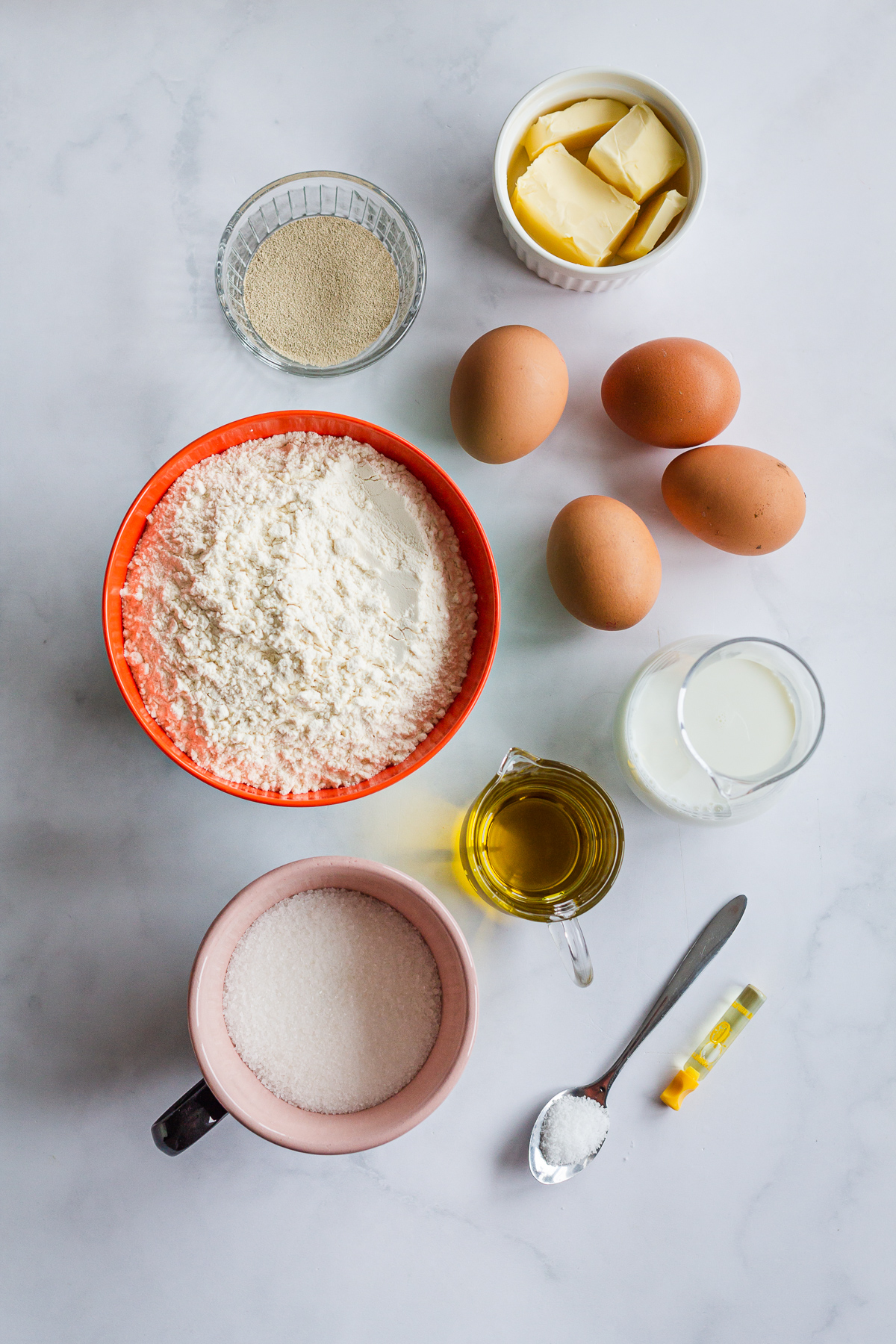
What ingredients you need
You need very simple ingredients for this recipe:
- all purpose flour
- instant dry yeast
- milk
- eggs
- sugar
- butter
- oil: I prefer extra virgin olive oil
- lemon zest or vanilla extract
- a bit of salt
- raisins or other dried fruits (optional)
Find the complete list of ingredients with their quantities below the post, in the recipe card!
Preparation summary
Making kozunak requires about two hours for the dough to proof but it is totally worth it!
- First you need to combine the yeast with half of the warm milk and one teaspoon of sugar to get activated.
- In the meantime whisk the eggs with the rest of the milk and the sugar. It is not necessary to whisk them for a long time but the sugar needs to be dissolved.
- Mix the flour with the salt in a large bowl.
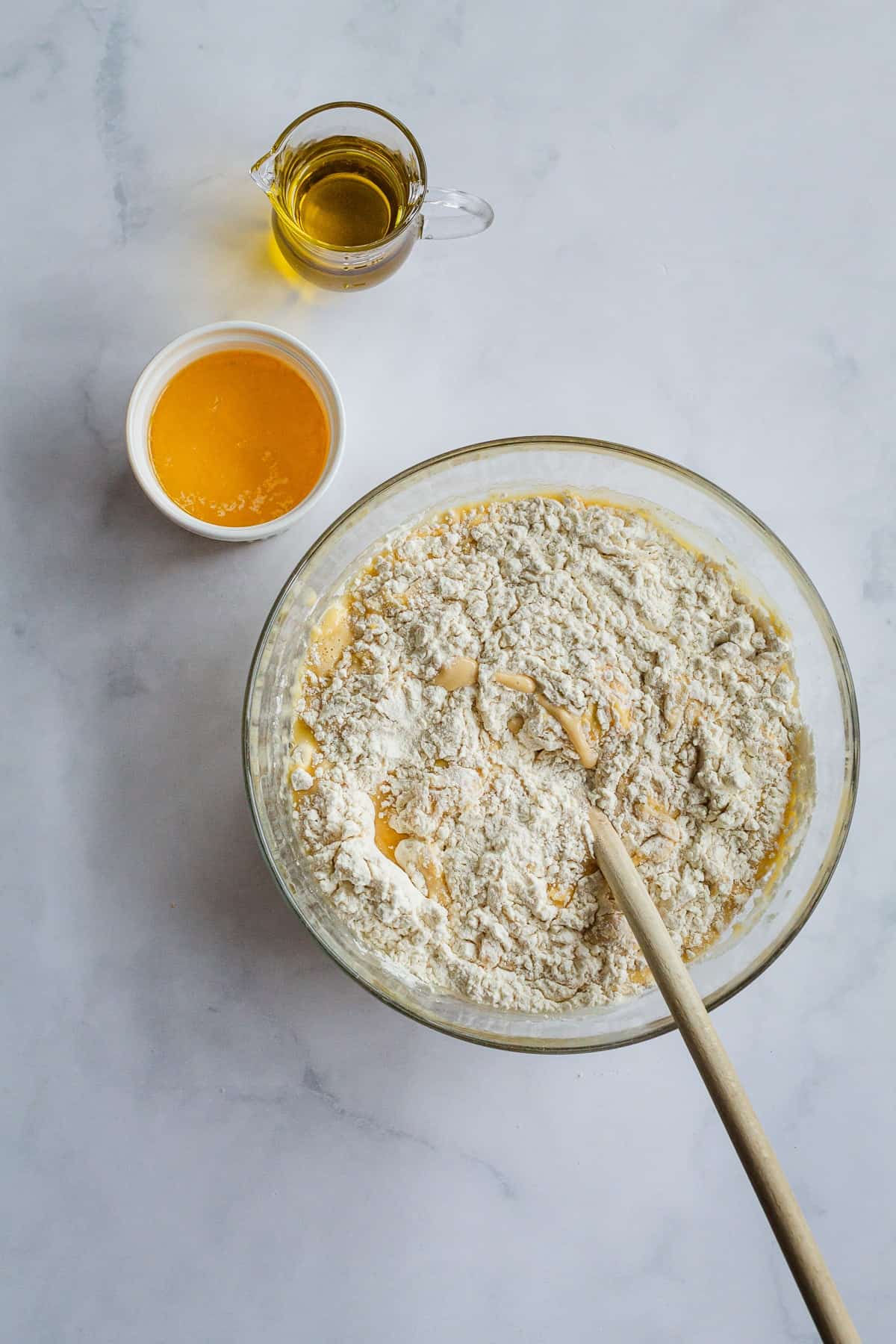
- Add the activated yeast to the flour. Add also the lemon zest and the egg mixture. Mix everything with a wooden spoon and then with a hand (or use your stand mixer with dough attachment).
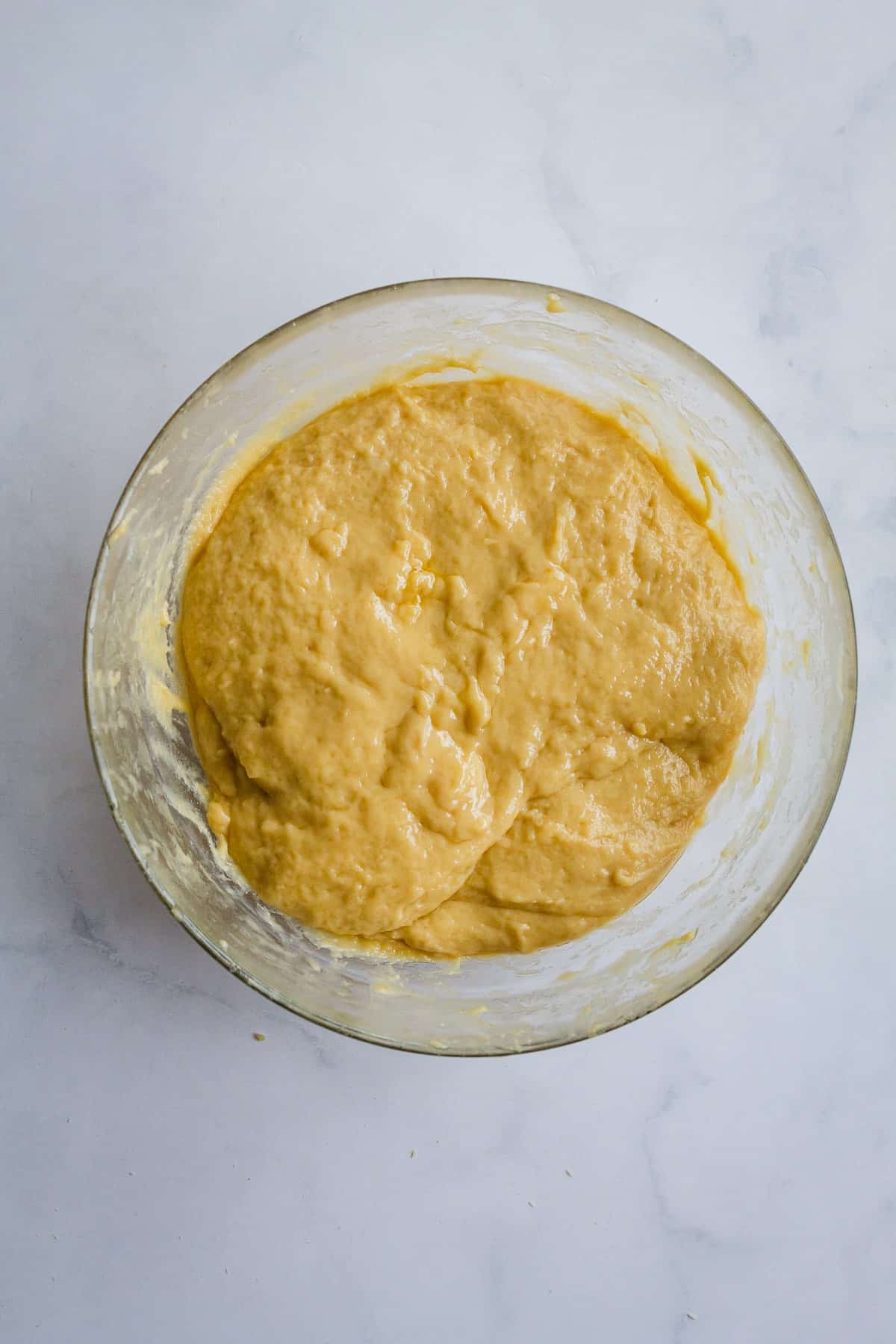
- When you make a dough, little by little start adding first from the butter and then from the oil. Knead by hand or with a mixer at a low speed until all the fat is absorbed.
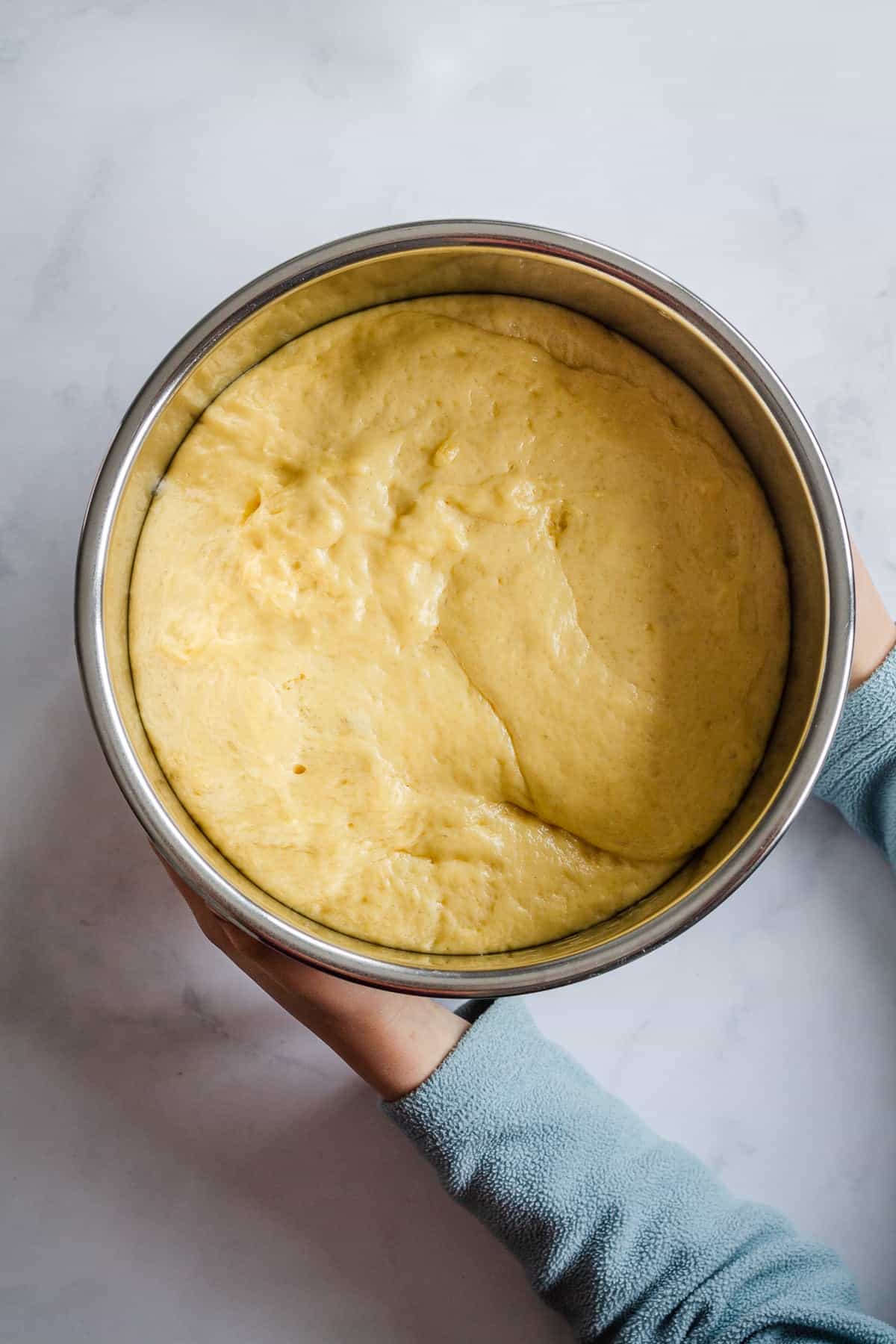
- Then you need to let the dough proof for about 1,5 hours at a warm place until it doubles (at least) its size.
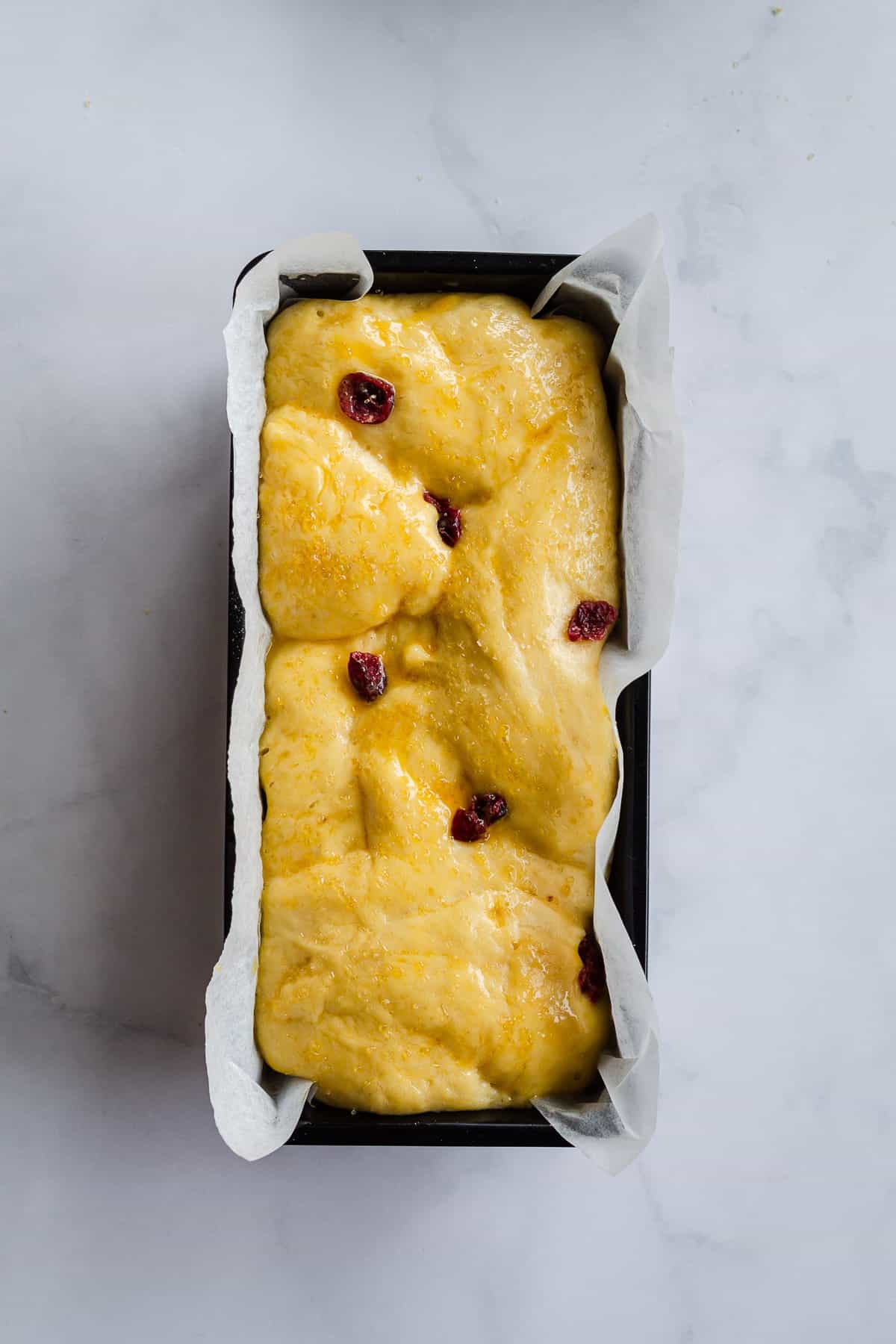
- At this point you can place the kozunak in greased pans: braided, rolled or as you like. You can add some raisins inside the dough or just sprinkle them on top.
- Let it proof for another 30 minutes at a warm place. Brush with beaten egg on top and sprinkle with sugar.

Beat the eggs and add milk and sugar Mix the flour with the egg and yeast mixtures let the dough proof The proofed dough

Baking
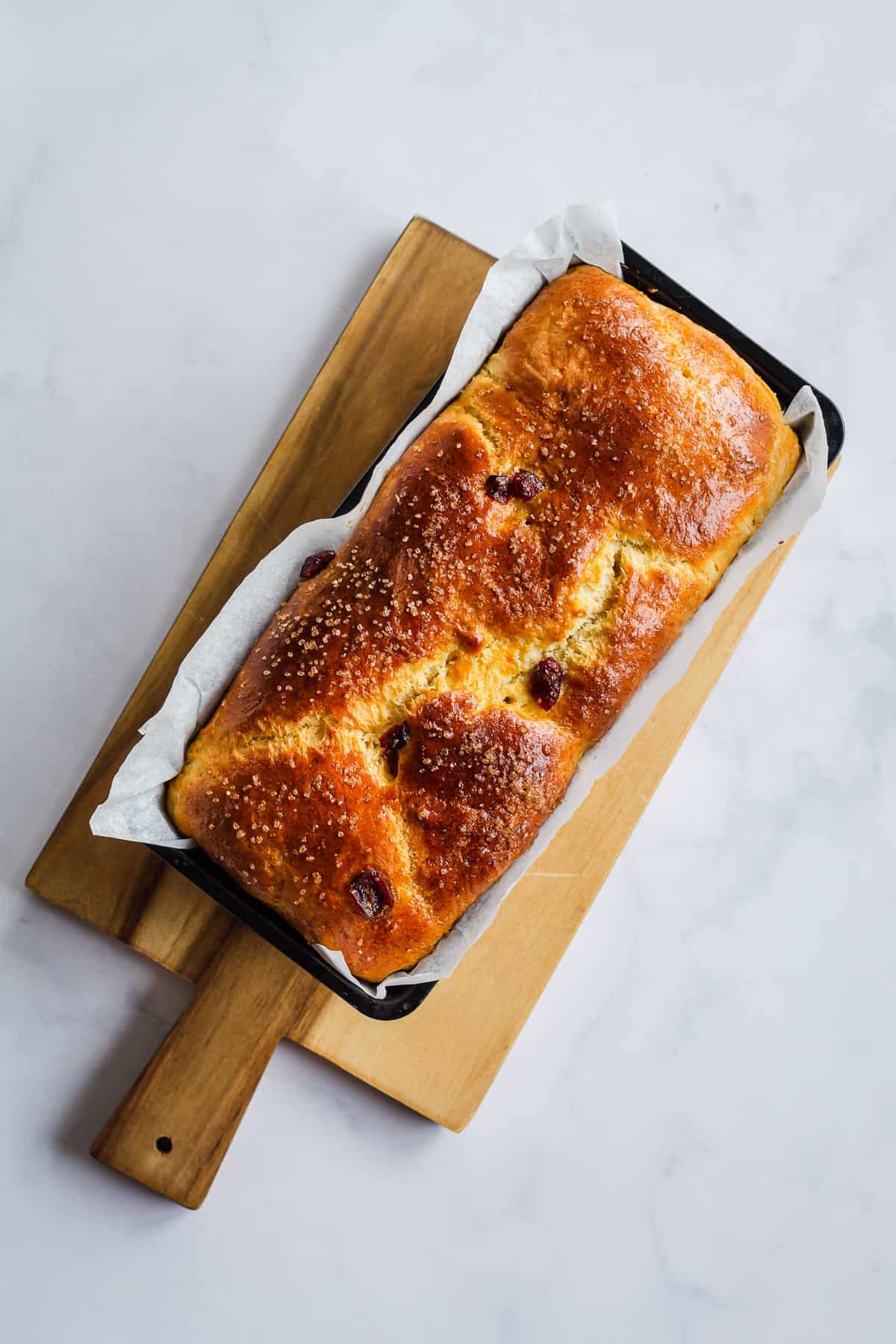
Kozunak is baked at a preheated oven at 360º F/ 180 ºC. Bake until golden brown. Don't forget to test with a wooden skewer: no liquid dough should come out.
How to create "threads"
- You need to have all ingredients at room temperature. This is imperative for a good easter bread.
- Don't increase the quantity of sugar! The sweetener doesn't allow the gluten to develop well.
- The secret for a fluffy inside that resembles threads is to knead the dough for a long time (15-20 minutes), adding the fat little by little. The fat helps the developed gluten to separate into threads.
- To help the process, you can also extend the dough and twist it from time to time during the kneading.
- But don't worry if your kozunak eventually doesn't have well separated threads! Even without them it can be delicious and fluffy: the success is in the taste and the overall texture!
Other tips
- Kozunak making requires a warm kitchen.
- If you have an Instant pot, use the Yogurt option to proof the dough: you will be impressed with the result!
- For the second proofing, when the breads are already in their pans, I like to preheat the oven to 60º C/ 140º F and switch it off few minutes before placing the bread inside, leaving just the light on. Keep the oven door ajar.
- If the top of the bread becomes dark and the inside is still raw, cover it with aluminium foil or baking paper to prevent from burning.
Serving
This easter bread is great served with a glass of milk. it is the most delicious Easter breakfast from my childhood, served together with hard boiled eggs!
Kozunak is a sweet bread but it is not as sweet as a cake. Therefore you can eat it for breakfast or as an afternoon snack, not only for desert.
When it becomes few days old, you can make wonderful french toast or bread pudding with it!

Storing
Keep the kozunak covered for 2-3 days. It will last up to 4 days in the fridge.
You can freeze kozunak for up to 3 months.
I hope you would like this wonderful festive recipe! Let me know in the comments what you think about it!
Below you will find other typical dessert recipes:
Kozunak - Bulgarian Easter Bread
Ingredients
- 4cups/ 500 g all purpose flour + some more if needed
- 4 large eggs
- ⅓ cup/ / 80 g butter melted
- 3,5 tbsp/ 50 ml olive oil
- ½ cup + 1 tablespoon / 120 g caster sugar
- ½ cup/ 120 ml milk warm
- 2 ½ tsp/ 7 g instant yeast
- 2 teaspoon vanilla extract or zest of 1 lemon
- 1 teaspoon salt
- ⅓ cup / 50 g raisins or dried cranberries, optional
- 1 tbsp granulated sugar to sprinkle
Instructions
- Leave the ingredients at room temperature for 30 minutes before starting to make the bread.
- Combine half of the milk with 1 teaspoon of the sugar and the instant yeast. Stir and let stay few minutes to get activated.
- In a bowl whisk the eggs lightly. Take out 2 tablespoon of the mixture into a small bowl, cover it and keep it in the fridge: this will be used to brush the tops of the breads before baking.
- Add the rest of the sugar and the warm milk to the eggs. Continue whisking gently until the sugar is dissolved.
- Sift the flour in a large mixing bowl (or the bowl of a stand mixer). Add the salt and mix to combine.
- Add the activated yeast, the lemon zest or vanilla extract and the egg mixture. Mix with a wooden spoon or with the dough attachment of a stand mixer until forming a sticky dough.
- If not using a mixer, start kneading with your hand. If using a mixer, continue working with the dough attachment at a low speed.
- Little by little add the melted butter, kneading well after each addition until it is fully absorbed. Add also the oil in several portions, following the same process. Knead the dough for 15 to 30 minutes, while the fat is being absorbed, so that the gluten can develop well. For even better result you can from time to time extend the dough into strands and twist them with greased hands: this will help the gluten to develop.
- If the dough is too sticky and doesn't hold shape after the fat is absorbed, add some more flour and knead for few more minutes.
- Let the dough proof for 1- 1,5 hours at a warm place until it doubles its size. You can use the yogurt program of the Instant Pot if you have one.
- After the dough proofs, optionally add some raisins or other dried fruits and knead to distribute them around.
- You can make strands out of the dough and braid them with greased hands. Or you can just place the dough into 2-3 small greased pans or one large pan. Just make sure the pans are half full because the dough will double its size again.
- Cover the filled pans with baking paper and tea towels and let the dough proof for another 30 minutes at a warm place.
- Preheat oven to 360º F/ 180 ºC.
- Brush the tops of the breads with the remaining egg wash. Sprinkle generously with granulated sugar.
- Bake the breads for about 20 minutes or until the tops are golden and a wooden skewer, inserted in several places comes out clean. If the tops start becoming dark and the inside is not yet ready, place a sheet of baking paper or aluminium foil on top of the kozunak until it bakes completely.
- Let the breads cool until close to room temperature before serving them.
Notes
About the author

Food Blogger, Photographer and Cookbook Author. Founder of the sites Dani's Cookings and Taco & Tiramisu.
Paulette Rangel says
Daniela, what is an instant pot?
Also what is Caster sugar?
Daniela says
Hi Paulette,
Instant Pot is a very famous brand producing pressure cookers/ multi cooker appliances. It is a stand alone pressure cooker that has various programs, including such for just warming slightly so a yogurt to be made (which can be used also for dough proofing).
Caster sugar is same as superfine sugar - granulated sugar with smaller (finer) crystals that dissolve easier than the granulated sugar which consists of larger crystals.
I hope that helps!